

Vehicle Maintenance
The Ultimate Guide to Tire Rotation: How Often Should You Do It?

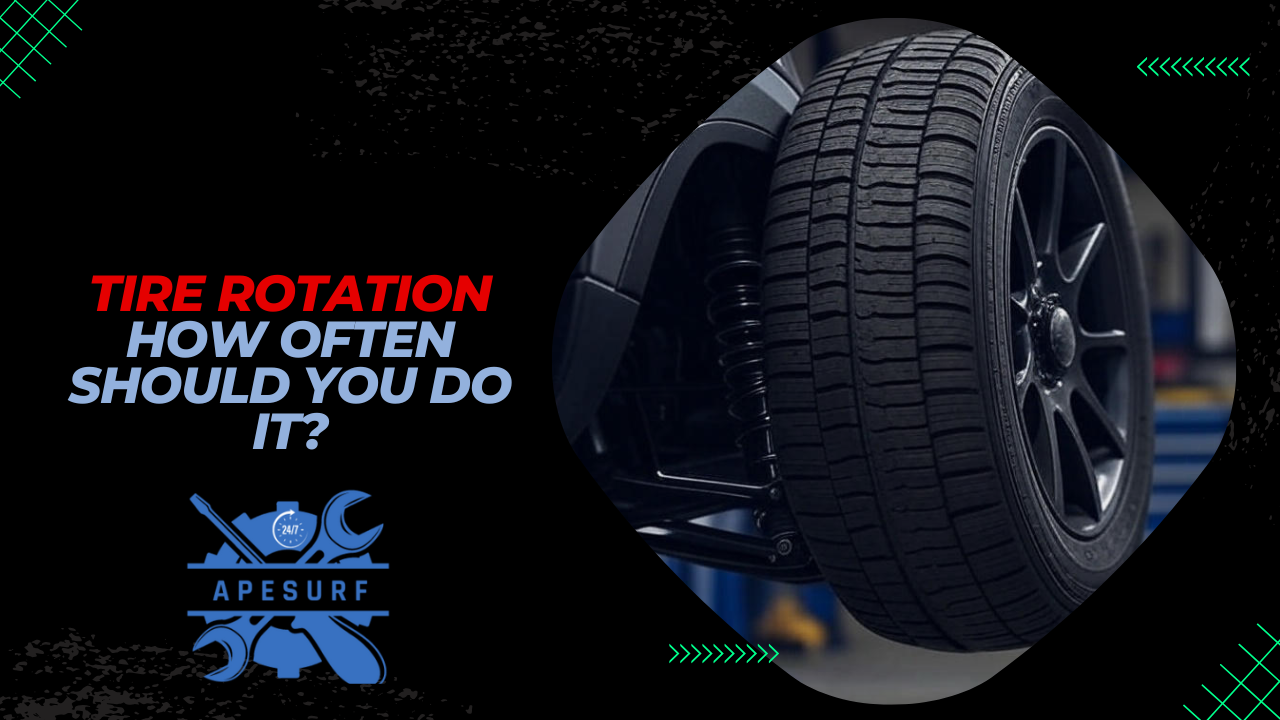
Tire rotation is a crucial aspect of vehicle maintenance that many car owners often overlook. But it plays a significant role in extending the life of your tires, ensuring better road traction, and improving overall vehicle performance. In this article, we will explore the ins and outs of tire rotation, including its importance, benefits, and the recommended frequency for rotations. We’ll provide a step-by-step guide on how to rotate your tires, tips for maintaining your tire health, common mistakes to avoid, and answers to frequently asked questions.
Introduction to Tire Rotation
Tire rotation refers to the practice of changing the position of your tires on your vehicle. Typically, it involves moving the front tires to the back and the back tires to the front, sometimes crossing them to promote even wear. This action helps distribute tire wear more evenly across all tires, preventing any one tire from becoming excessively worn faster than the others.
Every vehicle generates different wear patterns based on driving conditions, weight distribution, and tire type; thus, regular tire rotation is essential for maintaining optimal performance. Whether you drive a sedan, SUV, or truck, understanding how often to rotate your tires can save you time and money in the long run, making your rides safer and more comfortable.
Importance of Tire Rotation
The importance of tire rotation cannot be overstated. Tires endure various stresses when driving, leading to uneven wear, which can impact your vehicle’s handling and safety. Here are several reasons why regular tire rotation is crucial for your vehicle:
+ Enhanced Safety: Uneven tire wear can lead to blowouts or loss of traction, especially in wet or slippery conditions. Regular rotation minimizes these risks.
+ Improved Handling: Properly rotated tires provide better traction, which translates to improved steering response and overall handling of the vehicle.
+ Longer Tire Life: By rotating your tires regularly, you promote even tire wear, extending their lifespan and delaying the need for replacements.
+ Better Fuel Efficiency: Uneven tires can cause increased rolling resistance, which may lead to decreased fuel efficiency. Maintaining uniform wear helps optimize fuel economy.
By understanding the importance of tire rotation, you can make informed decisions that ultimately enhance your driving experience.
Everything You Need to Know About Tires on Your Car, Truck or SUV
Benefits of Regular Tire Rotation
Regularly rotating your tires comes with various benefits that contribute to your vehicle’s performance. Here’s a detailed look at some of these advantages:
1. Increased Longevity
Tires are a significant investment. By rotating them, you can increase their total lifespan, saving you money on premature replacements.
2. Enhanced Performance
When tires wear unevenly, it can result in a bumpy ride and poor handling. Regular rotation ensures a smoother, more enjoyable driving experience.
3. Improved Safety
Even tire wear reduces the likelihood of a tire failure, leading to safer driving conditions for both you and your passengers.
4. Early Detection of Other Issues
Regular rotations often provide an opportunity for mechanics to identify other tire-related issues, such as misalignment or balancer problems, before they escalate.
By acknowledging these benefits, car owners can better appreciate the role that tire rotation plays in their vehicle maintenance routine.
How Often Should I Rotate My Tires?
The age-old question remains: How often should I rotate my tires? The answer can depend on several factors, including your vehicle type, driving habits, and tire type. However, most automotive experts recommend rotating your tires every 5,000 to 7,500 miles.
Factors Influencing Rotation Frequency
+
Vehicle Type: Heavier vehicles, such as SUVs and trucks, may experience faster tire wear than lighter sedans.
+
Driving Conditions: Frequent driving on rough roads, potholes, or unpaved surfaces can lead to quicker tire wear, necessitating more frequent rotations.
+ Tire Type: Performance tires may require different rotation schedules compared to standard all-season tires. Always refer to the manufacturer’s guidelines.
Manufacturer’s Recommendations
Always check your vehicle’s owner manual for specific tire rotation recommendations from the manufacturer. Adhering to their advice ensures that you maintain your warranty and keep your vehicle running smoothly.
Step-by-Step Guide to Rotate Your Tires
Rotating your tires can be a straightforward process. While you may choose to let a professional handle it, here’s a step-by-step guide on how to do it yourself:
Step 1: Gather Your Tools
You will need a jack, jack stands, a lug wrench, and a tire rotation chart. If applicable, you may also want a torque wrench for re-tightening the lug nuts.
Step 2: Elevate Your Vehicle
Safely lift your vehicle using a jack, and set it on jack stands. Ensure that the car is stable before proceeding.
Step 3: Remove the Tires
Loosen the lug nuts before lifting the vehicle, then remove the tires one at a time.
Step 4: Rotate the Tires
Depending on your vehicle’s configuration (front-wheel drive, rear-wheel drive, or all-wheel drive), follow the rotation pattern suitable for your car type.
+ Front-Wheel Drive: Move the front tires straight back and the rear tires to the front, crossing them.
+ Rear-Wheel Drive: Move the back tires straight to the front and the front tires to the back, crossing them.
+ All-Wheel Drive: Follow the manufacturer’s instructions or use the front-to-back and side-to-side rotation.
Step 5: Reinstall and Tighten
Once the tires are in place, replace the lug nuts and tighten them in a star pattern to ensure even distribution.
Step 6: Check Tire Pressure
Finally, make sure to check and adjust the tire pressure before driving.
Tips for Maintaining Tire Health
To maximize the lifespan of your tires, consider these helpful tips:
Check Tire Pressure Regularly: Incorrect pressure can lead to uneven wear and reduced fuel efficiency.
Align Your Wheels: Misalignment can cause rapid wear on your tires. Have your alignment checked regularly, especially if you hit potholes or curbs.
Inspect for Damage: Regularly check your tires for any signs of damage, such as bulges, cracks, or punctures.
Rotate Seasonally: Many drivers find it beneficial to rotate their tires every season, particularly if they switch out winter and summer tires.
Follow the 5-Point Inspection: When checking your tires, look for tread depth, sidewall condition, pressure, alignment, and balance.
Common Mistakes in Tire Rotation
Even seasoned car owners may make mistakes when it comes to tire rotation. Here are some common errors to avoid:
+
Neglecting the Spare Tire: If your vehicle has a full-size spare tire, make sure to include it in your rotation schedule
+
Ignoring Signs of Wear: If you notice uneven wear patterns, don’t ignore them. They could indicate an underlying issue requiring immediate attention.
+
Inconsistent Rotation Schedules: Randomly rotating your tires instead of sticking to a consistent schedule can lead to uneven wear.
+ Skipping the Torque Specifications: Always adhere to the manufacturer’s torque specifications when re-tightening lug nuts.
By avoiding these pitfalls, you can ensure that your tires wear evenly and last longer.
FAQs on Tire Rotation
How do I know if my tires need rotating?
Look for signs such as uneven tread wear, vibrations while driving, or a drop in vehicle handling. If you’re unsure, a quick inspection by a professional can help.
Can I rotate my tires myself?
Yes, as long as you have the right tools and follow the proper steps. However, if you’re not comfortable doing it, don’t hesitate to have a professional take care of the task.
What happens if I don’t rotate my tires?
Failing to rotate your tires can lead to uneven wear, a decrease in vehicle handling, and safety risks. Ultimately, it may require earlier tire replacements.
Should I rotate my tires if they have different tread patterns?
Yes, different tread patterns should be rotated according to the specific guidelines for your tires, but you may need to consult with a tire professional for the best approach.
Conclusion
Understanding how often to rotate your tires and the benefits of doing so is essential for every vehicle owner. Regular tire rotation promotes safety, enhances handling, and extends the life of your tires, ultimately making your driving experience more enjoyable. By adhering to a tire rotation schedule and following the tips and guidelines we’ve provided, you can maintain your tires in optimal condition. Whether you choose to perform the rotation yourself or enlist the help of a professional, remember that keeping your tires healthy is a critical aspect of overall vehicle maintenance. Regular care, attention, and adherence to recommended practices will ensure that you enjoy a safer, smoother ride for years to come.
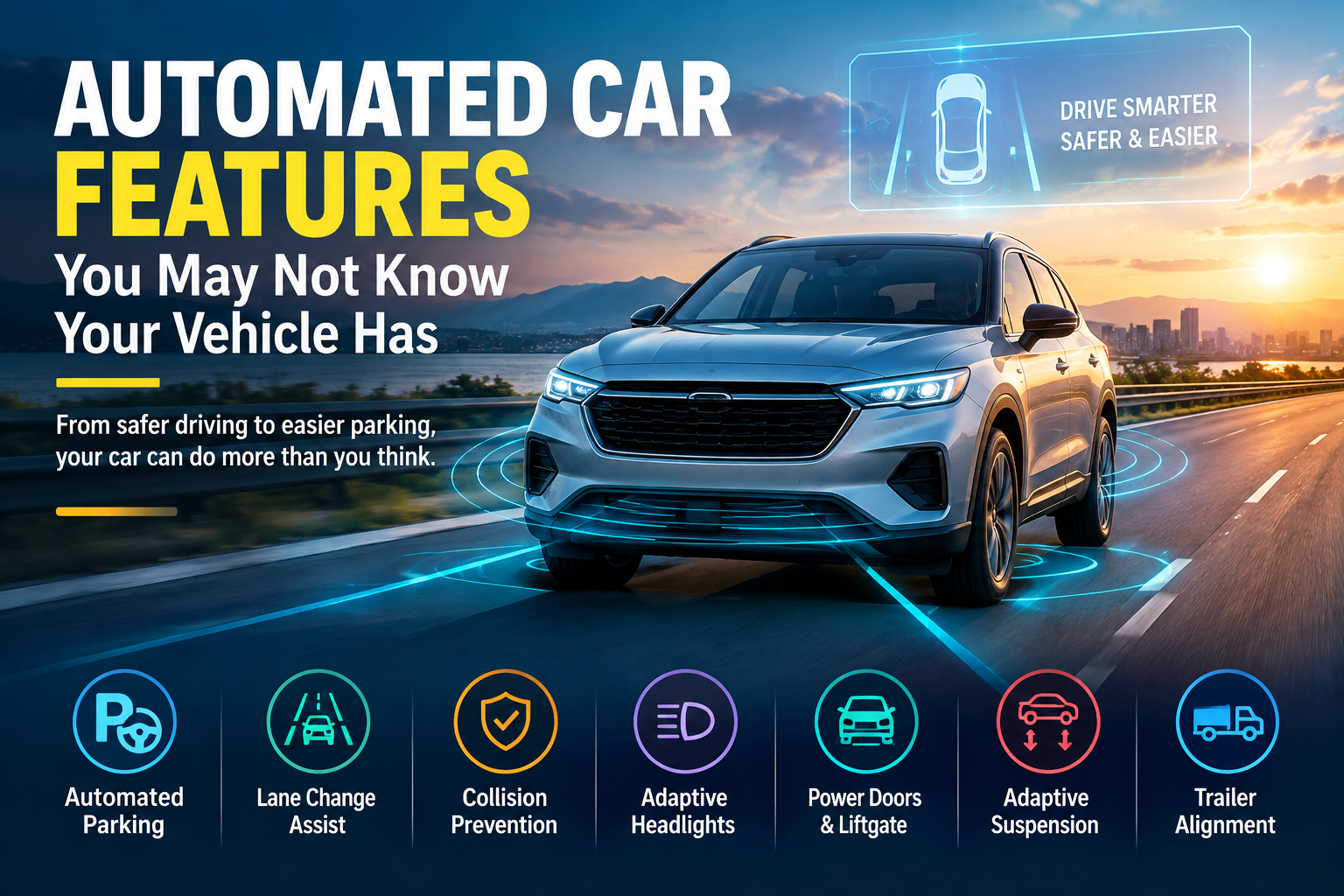
Modern vehicles can do far more than start, stop, and move from one place to another. In this article, we look at automated features that can make parking easier, improve safety, adjust the ride, protect passengers, and even help with trailer alignment. Some of these features may already be hiding in your car.
How much of the driving can your car actually automate?
Today’s vehicles can automatically handle many tasks that once required constant driver input. Advanced driver assistance systems, often called ADAS, are designed to automate specific parts of driving for safety, convenience, or both. Some features have become familiar, while others remain surprisingly easy to overlook.
Automatic high beams and lane keeping assistance are examples many drivers already recognize. But newer systems can go considerably further. Depending on the vehicle, automated technology can help with highway driving, steering, braking, parking, lane changes, and collision avoidance.
Hands free highway driving is one of the more advanced examples. Systems such as Ford BlueCruise and GM Super Cruise can control steering and braking on supported highways while allowing the driver to drive hands free. However, the driver still needs to remain available to take control quickly. Tesla’s Full Self Driving (Supervised) system also operates on many surface streets.
The important point is that these technologies do not simply turn a normal car into a completely autonomous vehicle. They automate specific functions under particular conditions, while the driver remains responsible for the vehicle.
Self-Driving Car Comparison Test: Tesla vs. BMW vs. Ford vs. GM | Hands-Free Driving Test
Can your car park itself without you turning the wheel?
Automated parking has been available for years, but many drivers may not realize how much the technology can actually do. Using cameras, sensors, and other systems, some vehicles can help steer the car into a parking space.
The technology can be especially useful for drivers who find parallel parking difficult. Some systems can search for a suitable parking space while the vehicle slowly moves along a street. Depending on the system, automated parking can also handle straight on parking.
Remote parking takes the idea a step further. Certain vehicles allow the driver to exit the car and then control the parking process using a key fob or smartphone app. This can be useful when a parking space is so tight that getting out of the vehicle would be difficult.
According to MotorTrend, Tesla pioneered this type of feature with Summon mode, while similar technology is also available from manufacturers including BMW, Hyundai, and Genesis. Some systems can even move the vehicle toward the driver after it has been parked.
Can your vehicle change lanes by itself?
Automatic lane changes can work alongside certain hands free highway driving systems. When the system determines that there is enough space and the maneuver is safe, it can change lanes automatically.
In some vehicles, the driver can activate the maneuver using the turn signal. Other systems can initiate a lane change under specific conditions. MotorTrend highlights BMW’s Highway Assistant with Active Lane Change, which can initiate a lane change after the driver glances toward one of the sideview mirrors.
These technologies show how modern driver assistance is moving beyond simply keeping a vehicle centered in its lane. The vehicle can combine information from its sensors with steering and braking functions to perform more complicated driving tasks.
However, these systems remain driver assistance technologies. The driver must still be prepared to take control. That distinction is important because automated steering or lane changing does not remove the need for driver attention.
How can your car automatically react to a possible crash?
Some automated safety systems are designed to react when a collision may be about to happen. Forward collision warning with automatic emergency braking is one example.
The system uses cameras and other sensors to detect a potential collision. It can warn the driver, and if the warning is not acted upon, the vehicle can automatically apply the brakes. MotorTrend notes that this technology is now mandated on all new light duty passenger vehicles in the United States.
Other systems can help in more specific situations. Intersection turning assist can detect vehicles approaching from the side at intersections. On some vehicles, the system can alert the driver and automatically apply the brakes to help prevent a collision.
Evasive steering assist is another technology that can intervene in an emergency. Instead of simply braking, the system can take over steering to maneuver the vehicle around an object.
These features demonstrate how automation can operate during situations where a driver’s reaction time may be limited.
What happens when someone opens a car door into traffic?
A vehicle’s safety technology can also protect people before the car even starts moving. Safe Exit Assist is designed to monitor the area behind a vehicle for approaching vehicles or cyclists.
If the system detects a potential collision, it can alert occupants before they open a door. In some cases, the vehicle can even prevent the door from opening when the system determines that a collision may occur.
Another useful feature is reverse automatic emergency braking. This is often connected with rear cross traffic alert, which warns the driver when another vehicle is moving behind the car while the driver is backing out of a parking space or driveway.
The automatic braking function goes a step further. If the reversing vehicle gets too close to an object, the system can automatically apply the brakes.
These features are particularly relevant in parking lots, driveways, and other areas where vehicles, cyclists, and pedestrians can appear around the car with little warning.
Can your headlights automatically see around corners?
Modern lighting systems can do much more than simply switch between low and high beams. Adaptive headlights can automatically swivel in the direction the steering wheel is turned, helping illuminate the road as the vehicle changes direction.
Some newer systems are considerably more advanced. MotorTrend describes Mercedes Benz Digital Light technology, which uses high definition solid state lighting and matrix LED technology. The system can illuminate areas of the road while dynamically controlling sections of the light to reduce glare for oncoming traffic and pedestrians.
Some Audi and Porsche vehicles also use matrix LED headlights with cameras that detect oncoming vehicles. Individual sections of the high beam can then be turned off while other areas remain illuminated.
Traffic sign recognition provides another automated visual function. A vehicle’s camera can read and interpret traffic signs, including speed-limit signs. However, not every system relies on cameras. Some vehicles use GPS data to determine the speed limit, which MotorTrend notes can be less accurate when a posted limit has changed.
What other parts of your vehicle can operate automatically?
Automation is not limited to driving and safety. Some vehicles can automatically open doors, liftgates, or truck entrances when the key fob is nearby. Certain systems can also respond to a foot movement beneath the rear bumper.
Automatic door closure is another convenience feature. Some vehicles use soft-close technology to gently pull a door shut instead of requiring the occupant to slam it. Other vehicles can automatically close an open door, while some models offer powered doors that open and close at the touch of a button.
The suspension can also respond automatically. Adaptive suspension systems can change the vehicle’s suspension characteristics based on road conditions or the driver’s selected setting. Some systems can even adjust according to how the vehicle is being driven.
Automatic ride height is another example. Certain luxury SUVs and pickups can change their ride height based on vehicle speed and terrain. Some can also lower themselves to make getting out of the vehicle easier.
Can your car react to rain, recognize you, and adjust the cabin?
Rain-sensing technology has become familiar through automatic windshield wipers, but some vehicles take the concept further. Certain systems can automatically close the windows and sunroof when precipitation is detected.
Modern vehicles are also beginning to use biometric technology. Some can use facial recognition to unlock the vehicle or fingerprint scanners to start the engine. These systems can also automatically adjust settings such as mirrors and seats according to a driver’s profile.
Smartphone-based vehicle keys are also becoming available across many new vehicles. This means some drivers can use their phone instead of a traditional key.
Inside the cabin, automated climate-related features can also control heated and ventilated seats. Instead of manually selecting seat heating or cooling, some systems can automatically adjust the seats based on the vehicle’s climate-control settings.
These technologies focus less on controlling the road and more on making everyday vehicle operation easier.
How can your vehicle help protect passengers and make towing easier?
Some automated features are designed around situations that happen when the vehicle is parked or being used for a specific purpose. A rear-seat reminder, for example, can use seat-related sensors to detect occupants or items left in the rear seat.
The feature is particularly designed to remind drivers about things such as pets and small children that could otherwise be forgotten inside the vehicle.
For pickup and SUV owners who tow trailers, automatic trailer alignment can address another difficult task. Backing a vehicle into the correct position to connect with a trailer can be challenging, especially when precise steering is required.
MotorTrend identifies systems from Ford, Land Rover, Ram, and Toyota that can automatically steer and brake the vehicle to guide it into alignment with the trailer’s ball.
That is another example of how vehicle automation is expanding beyond traditional driving assistance. Technology can now help with specific ownership tasks that previously depended entirely on driver skill and careful maneuvering.
Why should drivers learn which automated features their vehicle has?
The biggest surprise may be how many automated functions can already exist in a modern vehicle. A driver may know about adaptive cruise control or automatic headlights while being completely unaware that the same vehicle can perform additional tasks.
Some features focus on convenience, such as automated parking, remote parking, powered doors, and hands-free opening. Others focus on safety, including automatic emergency braking, safe exit assistance, reverse automatic braking, and intersection assistance.
There are also systems that change the way a vehicle behaves. Adaptive suspension and automatic ride height can adjust the vehicle according to conditions, while automated trailer alignment can make towing easier.
Knowing what your vehicle can do allows you to understand the technology already built into it. It also helps you recognize that different automated systems have different functions and operating conditions. Some assist with specific tasks rather than replacing the driver.
If you have recently bought a newer vehicle, it may be worth checking the vehicle’s available features and learning how its automated systems operate.
Conclusion
Modern vehicles are becoming increasingly automated, and many of the most useful features may not be obvious at first glance. From parking and lane changes to emergency braking, adaptive headlights, automated doors, suspension adjustments, and trailer alignment, technology now handles a wide range of vehicle functions.
The key is understanding what each system is designed to do. Automated features can provide convenience and assistance, but many still require the driver to remain attentive and ready to take control.
Your vehicle may be capable of much more than you realize. 🚗⚙️
Which automated feature would you use the most? Share your thoughts in the comments and tell us what technology your vehicle has.
FAQs
Can automated vehicle features be found only in luxury cars?
No single category of vehicle has all of these technologies. The source describes features appearing across different types of vehicles, including luxury cars, SUVs, pickups, and vehicles from a range of manufacturers. Some technologies are focused on premium convenience, while others are designed around driving assistance or safety.
Do all vehicles have the same automated features?
No. Automated technology varies between vehicles and manufacturers. A feature available on one model may not be available on another. Some manufacturers also use different names or implementations for similar functions.
Can automated features work in every driving situation?
No automated feature should be assumed to work in every situation. The systems described in the source are designed for particular tasks and conditions. For example, hands-free highway systems operate primarily on supported highways, while automated parking is designed for specific parking situations.
Can drivers use a smartphone as a vehicle key?
Some newer vehicles allow a smartphone to be used as a key. The source notes that phone-based keys are available across many new cars, although availability depends on the vehicle and its technology.
Are automated vehicle features replacing drivers?
The technologies described are primarily designed to automate specific functions rather than eliminate the driver’s responsibility. Even advanced hands-free driving systems require the driver to remain available to take control when necessary.
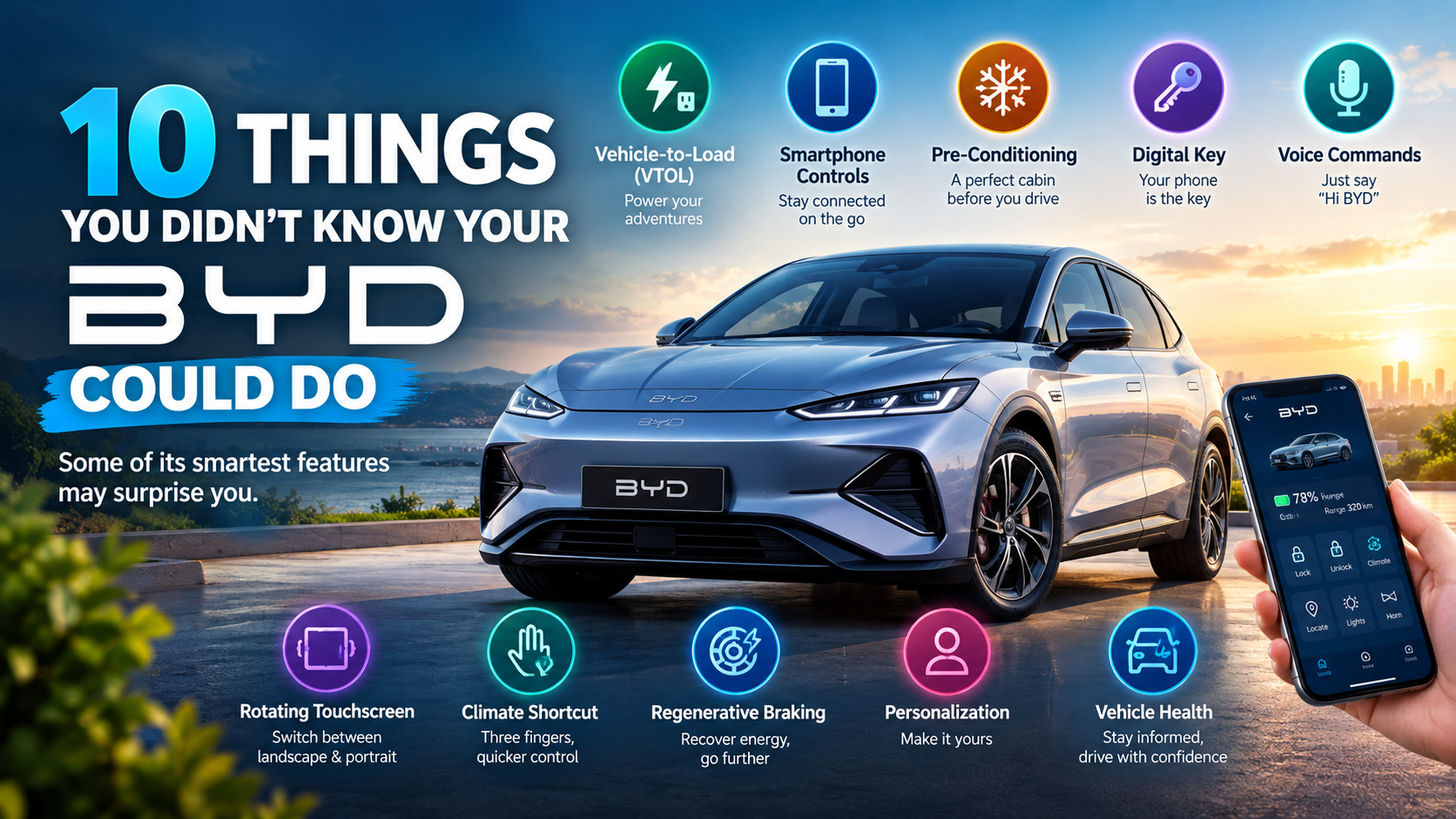
There’s a lot more to a modern BYD than simply getting from one place to another. In this article, we look at useful technology that can make daily driving easier, improve comfort, help with energy use, and give drivers more control over their vehicle. Some features may be easy to overlook.
Could Your BYD Be More Useful Than You Realize?
Modern vehicles are becoming more like connected devices on wheels. Drivers often learn the basic controls, charging process, and infotainment system when they first get the vehicle. But that does not always mean they discover every feature built into it.
BYD vehicles include a range of technology designed around convenience, comfort, connectivity, and energy efficiency. Some functions can be accessed from the vehicle itself, while others can be controlled through a smartphone. For owners who have only been using the basic features, there may be useful tools waiting to be discovered.
The important point is that feature availability can vary between BYD models. However, the source highlights several functions that are available across much of the range or on compatible models. Understanding what your particular vehicle can do can help you get more value from the technology already available to you.
Hidden BYD Features Most Owners Discover TOO Late!
Can Your BYD Power Electrical Devices?
One of the most interesting features highlighted in the article is Vehicle-to-Load, or VTOL. This technology allows the vehicle’s battery to provide power to external electrical devices through an adapter.
That can turn the vehicle into a useful portable power source when appropriate equipment is available. For example, the source describes situations such as making coffee while camping, charging an electric bike, powering outdoor lighting, or operating a laptop while working remotely.
This is particularly interesting because an electric vehicle is normally thought of as something that consumes electricity rather than provides it. With VTOL, the vehicle can also become part of the power solution for certain activities.
For drivers who enjoy outdoor trips or spending time away from conventional electrical outlets, this can be a practical feature. Instead of viewing the vehicle only as transportation, owners can make use of its battery in another way.
What Can You Control From Your Smartphone?
The BYD App can provide drivers with more information and control than simply checking the vehicle’s battery level. According to the source, compatible functions include remotely locking and unlocking the vehicle, checking charging status, monitoring tyre pressures, locating the vehicle, and activating the lights or horn.
These functions can be useful in everyday situations. For example, if you are unsure whether you locked the vehicle after walking away, checking through the app can provide an additional way to confirm its status. The ability to locate the vehicle can also be useful when you have forgotten where you parked.
The app can also help drivers stay connected with the vehicle without being physically inside it. Instead of needing to return to the car to check certain information, compatible vehicle data can be accessed through the smartphone.
For owners who have not explored the BYD App beyond basic functions, it may be worth looking at the features available for their specific vehicle.
Can You Prepare the Cabin Before You Drive?
Getting into a vehicle that is extremely cold or hot can make the first few minutes of a journey uncomfortable. The source explains that the BYD App can allow compatible vehicles to activate climate control remotely before the driver sets off.
This means the cabin can be prepared before entering the vehicle. Depending on the model, drivers may also be able to adjust seat heating or ventilation settings in advance.
This type of feature is especially useful because comfort can be addressed before the journey actually begins. Instead of starting the drive and then waiting for the cabin to reach a comfortable temperature, the vehicle can be prepared beforehand through the available controls.
For owners who already use the smartphone application, climate control may be one of the more useful functions to explore. As with other features mentioned in the article, the exact functions available depend on the BYD model and its supported technology.
Can Your Phone Work Like a Car Key?
Some newer BYD models can allow a compatible smartphone to function as a digital key. The source explains that this can work through Apple Wallet or Android Wallet integration on supported vehicles.
The idea is straightforward: instead of relying only on a traditional physical key, the driver’s phone can provide vehicle access and, on compatible models, allow the vehicle to be started.
There can also be a practical benefit when more than one person needs access to the vehicle. The source notes that digital-key functionality can make sharing access with family members simpler.
For drivers who already depend heavily on their smartphones, having the phone serve another role in the vehicle can be convenient. However, because this function is limited to compatible models and supported phones, owners should check whether their particular BYD supports the feature.
What Can “Hi BYD” Actually Do?
Voice control can reduce the need to search through touchscreen menus while driving. BYD’s intelligent voice assistant can be activated by saying “Hi BYD,” according to the source.
The assistant can perform several functions, including adjusting the temperature, setting a navigation destination, making a phone call, opening windows, and controlling media playback.
This can be particularly useful when a driver wants to perform a simple vehicle function without manually navigating through menus. Voice commands can provide another way to interact with the vehicle’s technology while keeping attention focused on driving.
The feature also demonstrates how vehicle controls are moving beyond traditional buttons and switches. Instead of physically finding a particular setting, compatible BYD systems can respond to spoken commands.
Owners who have never tried the voice assistant may be surprised by how many everyday functions it can control.
Why Does the BYD Touchscreen Rotate?
The electrically rotating touchscreen is one of the most distinctive technology features highlighted in the article. On many BYD models, the screen can switch between landscape and portrait orientation with a button press.
Different screen orientations can be useful for different tasks. The source notes that landscape mode can work well for navigation and driving information, while portrait mode can make some menus and applications easier to use.
Beyond its practical purpose, the rotating screen is also a noticeable feature for passengers. It gives the interior a different feel from vehicles that use a permanently fixed display.
Drivers who normally leave the screen in one position may want to explore whether changing its orientation makes certain tasks easier. It is another example of technology that can be overlooked simply because owners become accustomed to the default setup.
Is There a Faster Way to Adjust the Climate?
Touchscreen menus can sometimes require several steps to reach a particular vehicle function. The source highlights a shortcut available on compatible BYD touchscreens that uses a three-finger swipe to adjust the climate-control temperature.
Instead of opening additional menus, the driver can use the touchscreen gesture to make the adjustment more quickly. Small shortcuts like this can make a difference during everyday driving because they reduce the number of steps needed for a common task.
This is the type of feature that may not be immediately obvious to a new owner. Someone can use the vehicle for months while relying on the standard controls without discovering alternative touchscreen gestures.
For owners who like finding hidden shortcuts in their technology, this is one worth checking on a compatible BYD. The availability of the gesture depends on the vehicle’s system and model.
How Does Your BYD Recover Energy While Driving?
Regenerative braking is another important part of the technology described in the source. When the vehicle slows down or brakes gently, the system can capture energy that would otherwise be lost and convert it into electricity for the battery.
This process is particularly relevant to electric-vehicle efficiency. Instead of allowing all of that energy to disappear as heat through traditional braking processes, regenerative braking allows some of it to be recovered and returned to the battery.
The source also notes that regenerative braking can help extend driving range and may reduce wear on traditional brake components over time.
For drivers moving from a conventional vehicle to an electric vehicle, regenerative braking can change the way the vehicle feels during deceleration. Understanding how the system works can help owners better appreciate one of the technologies operating in the background during everyday driving.
Can You Personalize Your BYD and Monitor Its Condition?
The BYD infotainment system can be personalized in a way that is similar to customizing a smartphone. According to the source, drivers can rearrange widgets, move shortcuts, and organize frequently used functions.
That means the home screen does not necessarily have to remain arranged around the manufacturer’s default setup. Drivers who regularly use navigation, media controls, energy information, or vehicle settings can organize the available shortcuts around their own preferences.
The vehicle can also provide information about its current condition. Depending on the available systems, drivers can monitor battery charge, remaining range, tyre pressures, door and window status, and other vehicle information.
Having this information available can make it easier to check the vehicle before a journey. Instead of discovering a problem only after getting on the road, drivers can review available vehicle information beforehand and stay more aware of the car’s condition.
What Should BYD Owners Remember About These Features?
The biggest takeaway is that buying a modern vehicle is only the beginning. Many of the useful functions may not be obvious during normal driving, particularly when owners concentrate on the basic controls.
BYD’s technology includes features that cover several areas of ownership, from convenience and comfort to connectivity and energy management. Smartphone controls can provide remote access to certain vehicle functions, while VTOL can allow compatible vehicles to supply power to external devices. Voice commands and touchscreen shortcuts can make interaction with the vehicle easier.
At the same time, drivers should remember that not every BYD has exactly the same equipment or functionality. The source specifically refers to features available across much of the range and to functions available on compatible or newer models.
For that reason, owners should check which functions are supported by their specific vehicle. Once those features are understood, a BYD can offer considerably more technology than a driver may initially realize.
Conclusion
A BYD can offer much more than basic transportation. Features such as Vehicle-to-Load, smartphone controls, remote climate functions, digital keys, voice commands, rotating touchscreens, regenerative braking, personalization, and vehicle-health information can add useful capabilities to everyday driving.
The most important step is simply knowing what your particular vehicle supports. Technology is most useful when drivers understand how to use it.
If you own a BYD, which feature would you be most interested in trying? 🚗⚡ Share your experience and let other drivers know which feature you use most.
FAQ
Can BYD features change between different vehicles?
Yes. The source makes clear that some functions are available across much of the BYD range, while others are available only on compatible or newer models. Owners should therefore check the features supported by their specific vehicle rather than assuming every BYD has identical equipment.
Does every BYD owner need to use the smartphone app?
No requirement to use the app is stated in the source. However, the BYD App can provide access to several connected functions, including vehicle information and certain remote controls. Owners who have access to the app may want to explore the functions supported by their vehicle.
Are all smartphone digital keys supported by every phone?
The source describes digital-key functionality for compatible smartphones and newer BYD models through Apple Wallet or Android Wallet integration. This means compatibility matters, so owners should verify whether their specific vehicle and phone support the function.
Can the vehicle’s touchscreen always be rotated?
The source says the electrically rotating touchscreen is available on many BYD models. Therefore, it should not be assumed that every BYD vehicle has this feature. Owners should check their model’s equipment and available controls.
Where can a new BYD owner learn more about the vehicle?
The source recommends contacting a BYD South West showroom, where the team can explain the technology available on the owner’s specific model. Learning directly about the vehicle can help owners understand which features are available and how to use them.
10 Hidden Problems Electric vehicles (EVs) Owners Face
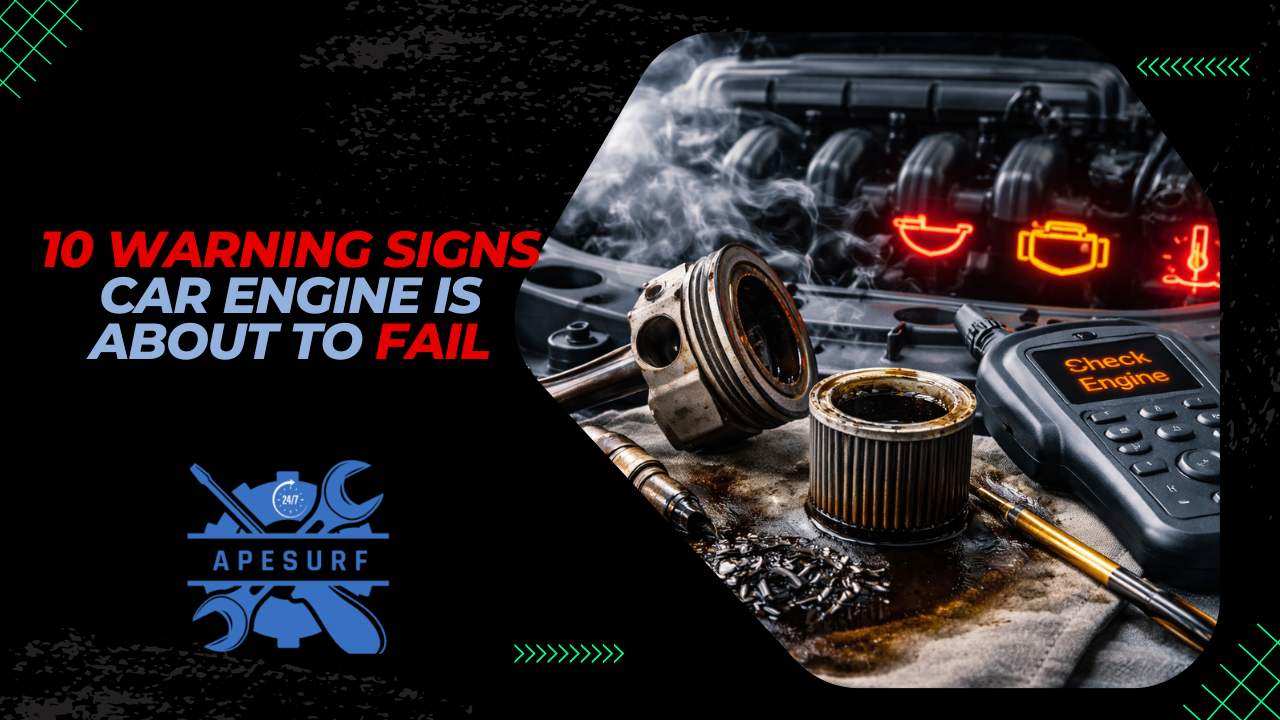
Car engine is the heart of your vehicle. When it starts to fail, it often gives warning signs before a serious breakdown happens. In this article, we will discuss ten common warning signs that your car engine may be about to fail and why you should never ignore them.
Is Your Engine Making Unusual Knocking or Tapping Sounds?
Strange noises coming from the engine are often one of the earliest warning signs of engine trouble. Knocking, tapping, or metallic sounds may indicate internal damage or parts wearing out. These noises typically occur when engine components such as pistons, bearings, or valves are not functioning properly.
Sometimes the problem may be caused by low engine oil or poor lubrication. Without proper lubrication, metal parts rub together, creating noise. If ignored, this friction can lead to serious engine damage.
If you notice unusual engine sounds while driving or when the car is idling, it is best to get the vehicle inspected quickly. Early detection can prevent expensive repairs or complete engine failure.
Is Excessive Smoke Coming from the Exhaust?
Your car’s exhaust smoke can reveal a lot about engine health. Different colors of smoke may indicate different problems inside the engine. For example, blue smoke usually means the engine is burning oil.
White smoke may suggest coolant leaking into the engine cylinders. This often happens when the head gasket is damaged. Black smoke usually means the engine is burning too much fuel due to a faulty fuel system.
If your vehicle suddenly starts producing thick or unusual exhaust smoke, it is a clear warning sign that something is wrong inside the engine. Ignoring this issue may cause severe engine damage over time.
Is Your Car Losing Engine Power?
A noticeable loss of engine power is another warning sign of possible engine failure. You may feel that the car struggles to accelerate or cannot maintain normal speed on the road.
This problem can happen for many reasons such as clogged fuel injectors, poor air supply, worn spark plugs, or internal engine wear. When the engine cannot produce the required power, driving performance becomes weak and unstable.
If your car suddenly feels slower or less responsive than usual, it is important to investigate the issue quickly. Continued driving with low engine power can worsen the damage.
Is the Engine Overheating Frequently?
Engine overheating is a serious problem that should never be ignored. When the engine temperature rises beyond safe limits, internal components can expand and become damaged.
Overheating may occur due to coolant leaks, radiator issues, water pump failure, or a faulty thermostat. In some cases, low engine oil can also cause excessive heat buildup.
If your temperature gauge frequently moves into the red zone or you see steam coming from the hood, stop the vehicle immediately and allow the engine to cool down. Continuous overheating can lead to permanent engine failure.
Are There Warning Lights Appearing on the Dashboard?
Modern vehicles use sensors to monitor engine performance. When something goes wrong, the system alerts the driver through warning lights on the dashboard. The most common one is the check engine light.
This light can appear for many reasons, including sensor failure, ignition issues, fuel system problems, or engine misfires. While sometimes the issue may be minor, it can also indicate serious engine trouble.
Ignoring dashboard warning lights can allow problems to grow worse over time. A quick diagnostic scan at a repair shop can identify the exact issue and help prevent major engine damage.
Every Dashboard Warning Lights in Your Car Explained
Is Your Engine Consuming Too Much Oil?
Engines normally use a small amount of oil over time, but excessive oil consumption is not normal. If you constantly need to add oil between service intervals, your engine may have internal wear.
Worn piston rings, damaged valve seals, or leaking gaskets can allow oil to enter areas where it should not be. When this happens, the engine burns oil during operation.
Running an engine with low oil levels can lead to severe internal damage. Regularly checking the oil level and monitoring sudden changes can help identify this problem early.
Is the Engine Vibrating or Running Rough?
A healthy engine should run smoothly with minimal vibration. If you start feeling strong vibrations, shaking, or rough idling, it may indicate engine problems.
This issue can occur due to misfiring spark plugs, damaged engine mounts, fuel system problems, or internal mechanical wear. When the engine does not run smoothly, it means the combustion process is not happening properly.
If the car shakes while idling or driving, it should be checked by a mechanic as soon as possible. Ignoring engine vibrations can eventually lead to more serious mechanical damage.
Is There a Strong Burning Smell from the Engine?
A burning smell coming from the engine area often signals overheating or leaking fluids. Burning oil or coolant can produce a noticeable smell inside or outside the vehicle.
Oil leaks may drip onto hot engine parts, creating smoke and a burning odor. Electrical components can also overheat and produce similar smells if there is a wiring issue.
If you notice unusual smells while driving, it is best to stop and inspect the vehicle. Continuing to drive with leaking fluids or overheating components may lead to severe engine failure.
Are You Noticing Metal Particles in the Engine Oil?
During routine oil changes, mechanics sometimes find small metal particles in the engine oil. These particles usually come from internal engine components that are wearing out.
Common sources include crankshaft bearings, pistons, and cylinder walls. When metal particles appear in large amounts, it means internal parts are grinding against each other.
This is often a serious warning sign that the engine is suffering from internal damage. If detected early, repairs may still be possible before a complete engine breakdown occurs.
Is Your Car Stalling or Struggling to Start?
Difficulty starting the engine or sudden stalling can also indicate major engine problems. When the engine struggles to start, it may be due to fuel system issues, ignition failure, or internal mechanical wear.
Sometimes the car may start normally but stall while driving or at traffic lights. This can happen if the engine cannot maintain proper combustion or fuel delivery.
Frequent stalling is a serious safety concern and should never be ignored. A professional inspection can help identify the root cause and prevent a complete engine failure.
FAQs
How often should I service my car engine?
Most vehicles should be serviced every 5,000 to 10,000 kilometers depending on the manufacturer’s recommendation. Regular servicing includes oil changes, filter replacement, and checking important engine components.
Can poor quality fuel damage an engine?
Yes, low quality fuel can cause carbon buildup, injector blockage, and poor combustion. Over time, this can reduce engine performance and lead to long term damage.
Does aggressive driving affect engine lifespan?
Frequent hard acceleration, high speed driving, and sudden braking can put extra stress on engine components. Smooth and controlled driving habits help extend engine life.
What role does engine oil play in engine health?
Engine oil lubricates moving parts, reduces friction, and helps control temperature. Without proper lubrication, internal components can wear out quickly and cause engine failure.
Can skipping regular maintenance cause engine failure?
Yes, neglecting regular maintenance such as oil changes and filter replacements can allow small issues to develop into major engine problems over time. Regular care is essential for long term engine reliability.
Conclusion
Your car engine usually gives warning signs before it completely fails. Strange noises, excessive smoke, overheating, power loss, and unusual vibrations are all signals that something may be wrong. Paying attention to these early symptoms can help prevent serious damage and expensive repairs.
Regular maintenance, timely inspections, and quick repairs are the best ways to keep your engine running smoothly for many years. If you notice any unusual behavior from your vehicle, it is always safer to have it checked by a professional mechanic.
car engine failure warning signs, engine failure symptoms, signs of a bad car engine, car engine problems, engine knocking sound causes, car losing engine power, engine overheating problems, excessive exhaust smoke causes, check engine light meaning, car engine maintenance tips, engine misfire symptoms, engine vibration causes, rough engine idle problems, burning smell from engine, car engine oil consumption issues, metal particles in engine oil, engine stalling problems, car engine not starting properly, early signs of engine failure, car engine troubleshooting guide, common engine problems in cars, how to prevent engine failure, vehicle engine repair signs, engine performance problems, car maintenance warning signs, engine damage symptoms, bad piston ring symptoms, worn engine bearings signs, head gasket failure symptoms, car overheating causes, engine oil leak problems, vehicle engine diagnostics, poor engine acceleration causes, car engine repair warning signs, internal engine damage symptoms, common vehicle maintenance problems, engine reliability issues, vehicle power loss causes, engine mechanical failure signs, automotive engine problems, engine noise diagnosis, engine overheating warning signs, car engine failure prevention, vehicle engine health check, engine running rough causes, engine combustion problems, car engine trouble symptoms, major engine repair warning signs, vehicle engine lifespan issues, car engine breakdown signs, engine warning indicators, car engine inspection tips

15 Things Automated Car Features You May Not Know Your Vehicle

10 THINGS YOU DIDN’T KNOW YOUR BYD COULD DO

10 Warning Signs Your Car Engine Is About to Fail

10 Hidden Problems Electric vehicles (EVs) Owners Face

Understanding Your Dashboard: A Guide to Common Warning Lights
10 THINGS YOU DIDN’T KNOW YOUR BYD COULD DO
15 Things Automated Car Features You May Not Know Your Vehicle
15 Things Automated Car Features You May Not Know Your Vehicle
Modern vehicles can do far more than start, stop, and move from one place to another. In this article, we...

10 THINGS YOU DIDN’T KNOW YOUR BYD COULD DO
There’s a lot more to a modern BYD than simply getting from one place to another. In this article, we...
10 Warning Signs Your Car Engine Is About to Fail
Car engine is the heart of your vehicle. When it starts to fail, it often gives warning signs before a...

10 Hidden Problems Electric vehicles (EVs) Owners Face
Electric vehicles (EVs) are becoming more popular because they are quiet, efficient, and better for the environment. However, EV ownership...
Understanding Your Dashboard: A Guide to Common Warning Lights
Introduction to Common Warning Lights In the realm of automobile maintenance, understanding your vehicle’s warning lights is crucial. These illuminated...

Stop! How to Know When It’s Time to Replace Your Brake Pads
Driving is an everyday activity for many people, but it can also be a source of anxiety especially when it...

Common Electrical Issues Plaguing car Owners
When it comes to cars, electrical problems often leave owners scratching their heads. The Chevy Malibu, a popular midsize sedan...


What Every Car Buyer Should Know
When buying a used car, understanding its history is crucial. One way to do that is by checking its Carfax...

Essential Tips for Maintaining Your Car’s A/C System
Car air conditioning systems are essential for comfort, especially during hot summer months. Understanding how to maintain this vital component...

Is Your Car Trying to Tell You? Signs of a Failing Alternator You Shouldn’t Ignore
When it comes to vehicle maintenance, understanding your alternator’s role is crucial. The alternator is a vital part of your...
-

 Vehicle Maintenance2 years ago
How to Replace the Fuel Pump on a 2000 Silverado: A Step-by-Step Guide
-
 Vehicle Maintenance2 years ago
Why is my Kia Sorento making a rattling noise when I accelerate?
-
 Vehicle Maintenance2 years ago
How to Program a 2008 Toyota Highlander Key Fob: A Step-by-Step Guide
-
 Vehicle Maintenance2 years ago
Common Issues with the Chevrolet S10 2.2 Engine: What Owners Need to Know
-

 Vehicle Maintenance2 years ago
Is the BJ’s Wholesale Auto Buying Program Worth It?
-
 Vehicle Maintenance2 years ago
Why won’t the Yukon fan shut off? Common causes and solutions explained
-

 Vehicle Maintenance2 years ago
Understanding the Hyundai vehicle Lease Early Termination Fee: What You Need to Know
-
 Vehicle Maintenance2 years ago
Why is my Toyota Camry’s fuel gauge stuck on full?